Magnolia Halfdanarson
Big BrotherMagnolia Halfdanarson, the narrator’s mother, is remembered through a tension between the vivid story her son Edison makes of her death and the narrator’s less consoling reconstruction of it. Raised in Oberlin and attached to a life far from Los Angeles show-business culture, she died after stepping into the path of a delivery truck; the narrator sees no evidence of intention, only a moment of inattention. Her memory becomes both a family dispute and a measure of how people try to give loss a shape.
Identity and Background
Magnolia came from Oberlin and from a solid, formerly industrial family whose standing was tied in part to her father’s decades of editing the local paper. She met Hugh at a regional horse show in Dubuque. The narrator doubts she took his acting ambitions seriously, imagining that she expected him eventually to return to his parents’ farm. Pies cooling in windows and relief at long-awaited rain represent the ordinary Midwestern life that, in the narrator’s view, would have suited her.
That imagined home remained important to her daughter. The narrator calls Magnolia a touchstone of authenticity and understands her own migration to the Midwest as a kind of homage. Magnolia’s remembered identity is thus not only that of a mother lost young, but also a point of orientation: a counterweight to the public performance and self-promotion that surrounded the family in Los Angeles.
Marriage and the Los Angeles Years
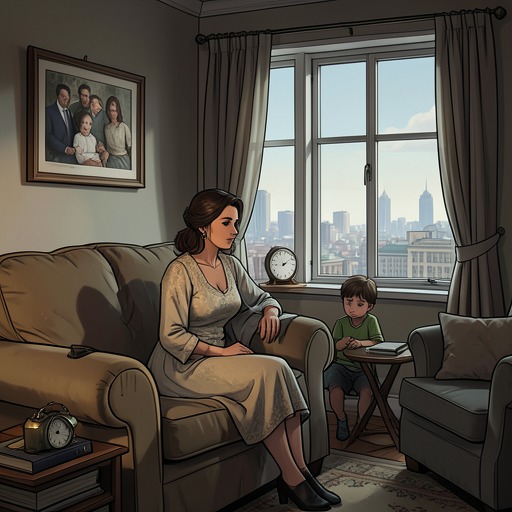
At parties in Los Angeles, Magnolia did not know how to dress and felt out of place among her husband’s new acquaintances. She once told the narrator that she had waited out many a drunken gathering in a locked bathroom while revelers tiddled on the door before giving up. She detested Travis’s pompous, self-promoting friends and privately wept whenever Joint Custody was renewed for another season.
Her name also marked a private distinction within the family’s public identity. In public, she used Appaloosa to humor Travis; her checkbooks carried the name of the man she believed she had married. That contrast gives the name a quiet emotional charge: the family’s television-era persona did not entirely replace the private life and marriage Magnolia understood herself to have.
The narrator considers the possibility that Magnolia was depressed, perhaps increasingly so after Solstice was born three years earlier, but is careful about the limits of that inference. As a child, she could not know whether a mother sleeping whole afternoons was ordinary, nor could she distinguish depression as an illness from sorrow with reason behind it. The narrator also thinks Magnolia probably knew Travis was having an affair with Joy, though that likelihood does not settle what Magnolia felt or understood.
Death and Conflicting Accounts
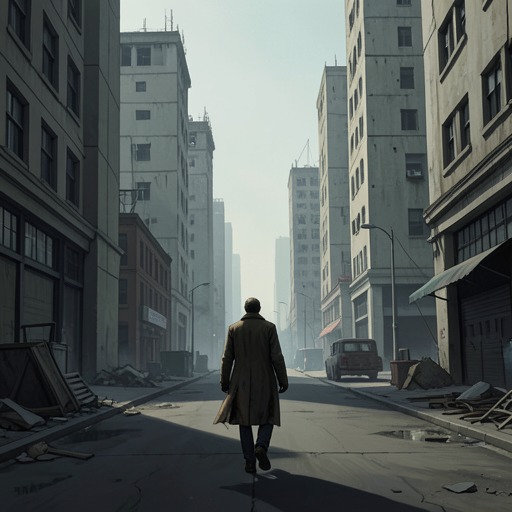
Magnolia died after stepping off the curb at the intersection of Foothill Boulevard and Woodland Avenue. A UPS delivery truck barreled past a fraction of a second later. The narrator presents this as the whole account: she stepped into the street and was struck, without asserting that she intended to die.
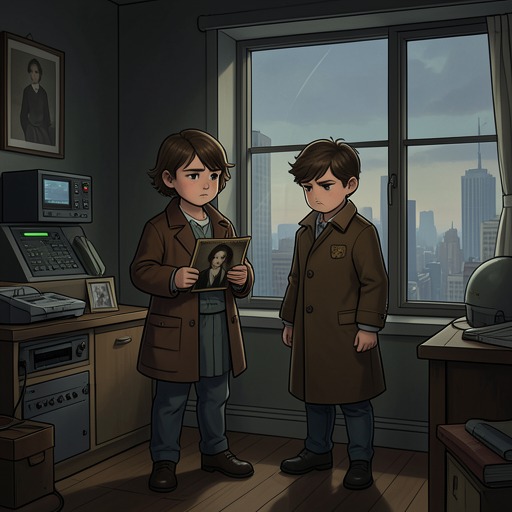
Edison tells a more purposeful story. He believes Magnolia saw the truck and gave herself up to its bumper, a version he connects to her despair over Travis’s betrayal. In this account, Travis’s infidelity becomes the cause of her death and proof of his character. The narrator understands the appeal of that construction: after a mother dies, assigning blame or meaning can seem less intolerable than accepting loss without compensation or lesson. But she insists on separating facts from beliefs, and refuses to treat the emotional force of Edison’s account as evidence that it is true.
Magnolia’s death also lies behind a disagreement between the siblings about what Edison knew of Travis and Joy’s affair. Edison maintains that he had known for years; the narrator believes neither of them understood until Travis began seeing Joy openly after Magnolia died. The narrator’s concern is not simply who was right about the affair, but whether Edison had known and failed to tell her. The family’s competing memories therefore extend beyond Magnolia’s final moment to the question of what was concealed while she was alive.
Memory and Significance
In her mid-twenties, the narrator cycled along a deserted two-lane street in New Holland and ran directly into a parked car. As she picked herself up and examined the crumpled bicycle frame, she thought of Magnolia. The collision recalled the ordinary, unobserved decisions people make while their attention is elsewhere—and the fact that, most of the time, they make them safely. Magnolia’s death did not yield a grand moral for the narrator; it gave her incredulous gratitude that she had not repeatedly met the same fate while distracted by the daily business of living.
The contrast with Edison is central to how Magnolia’s memory is narrated. The narrator associates his insistence on a large-scale story—whether about his mother’s death or his own life—with his appetite for Cinnabons and with the dramatic scale of his weight. For her, Magnolia’s final step remains an accident of attention rather than a deliberate act that can explain the family’s grief. The smallness of that account does not diminish the loss; it marks the difference between accepting uncertainty and turning suffering into a story with a culprit.